Category Archives: 19th century history

Carriage history collaboration: An Interview with Thomas A. Kinney

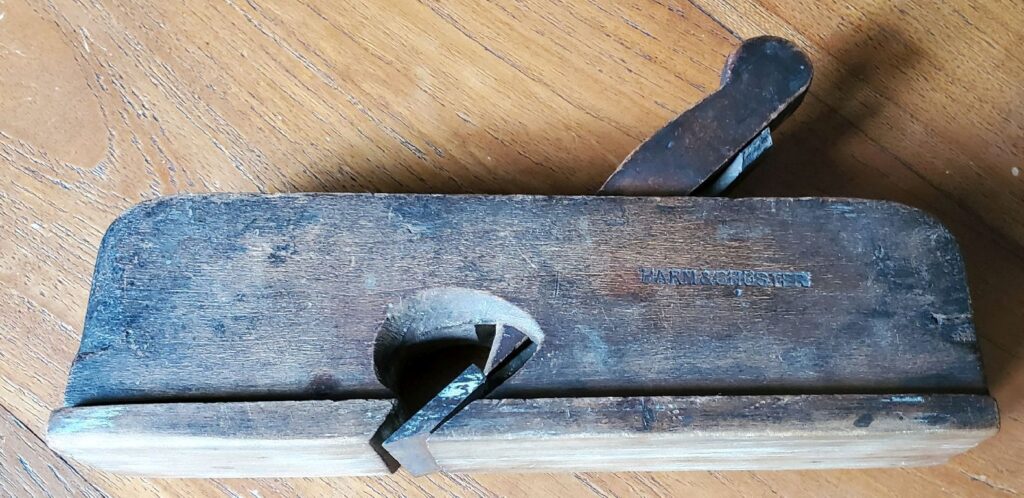
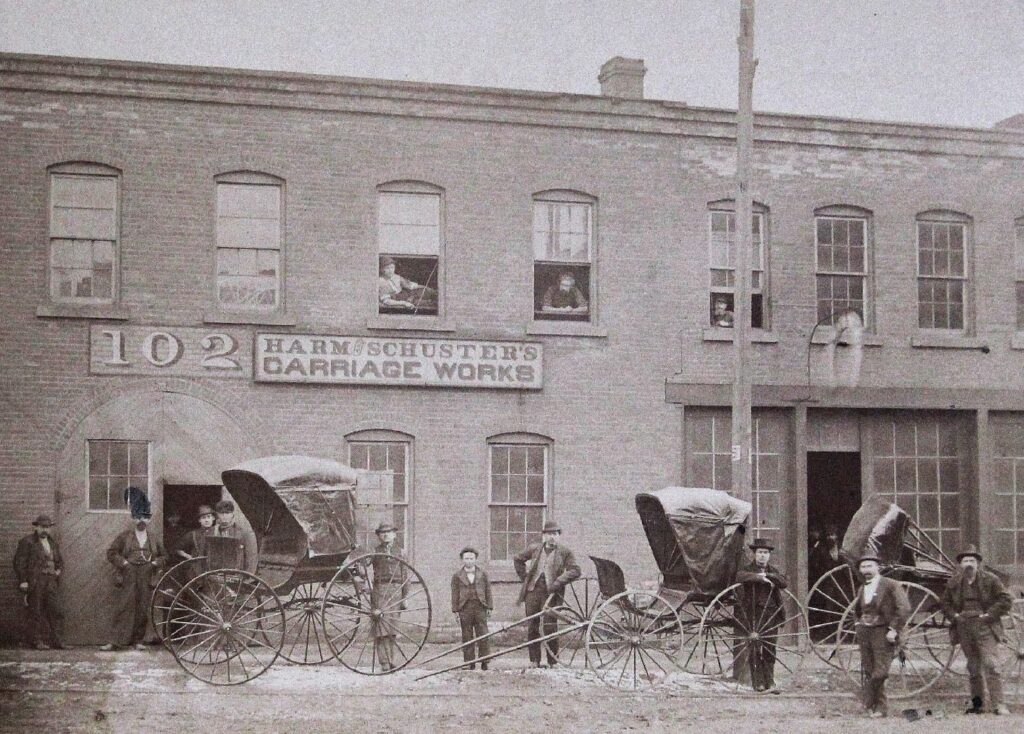
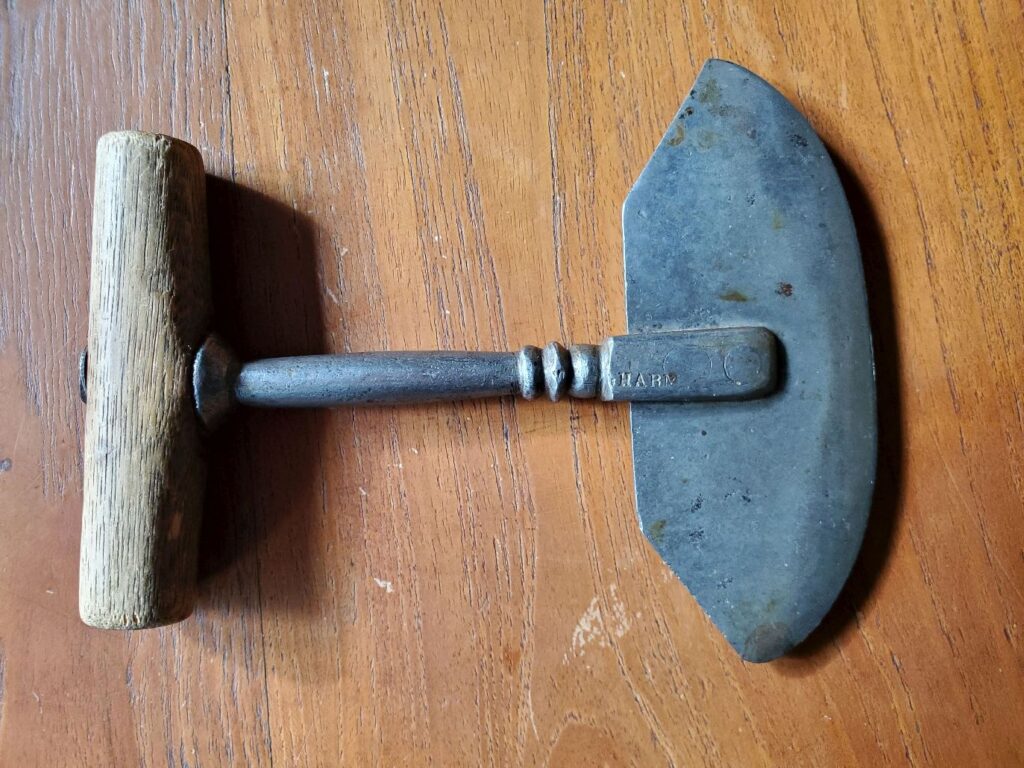
I first learned of Thomas A. Kinney‘s research on horse-drawn carriages when roaming around the The Encyclopedia of Cleveland History. In the section on the Wagon and Carriage Industry, I discovered a fascinating write-up about the prevalence of German carriage-makers in Cleveland, Ohio in the 19th century. Dr. Kinney had written the article. The information supported what I was learning from the letters of my ancestor, Michael Harm, once a carriage-maker in Cleveland, and so I emailed Dr. Kinney to share with him my photos of Harm & Schuster Carriages. We have been in correspondence ever since. Recently, Thomas A. Kinney spoke at the International Carriage Symposium in Williamsburg, VA.

INTERVIEW WITH THOMAS A. KINNEY

Thomas A. Kinney is Associate Professor of History at Bluefield College in Virginia and author of The Carriage Trade: Making Horse-Drawn Vehicles in America (Johns Hopkins University Press). He earned a B.A. in History from the University of Maine, then went on to Case Western Reserve University in Cleveland to earn his M.A. and Ph.D., also in history.

How did you first become interested in the wagon and carriage industry?

My research specialty was the history of technology. I came from Maine, a state with deep roots in the timber industry, and from a family with some involvement in that as well as in woodworking. I wanted to research something to do with logging, the woodworking trades—something like that. Acting on a chance conversation with a fellow graduate student, I began investigating wagon and carriage making. This was a woodworking trade, which like most crafts, underwent the process of industrialization. I became interested in the craft-to-industry transition, and it appeared horse-drawn vehicle manufacture would be a good candidate for such a study. I wasn’t disappointed.

No doubt you found a whole lot more than you bargained for. The Carriage Trade does such a great job of exploring more than woodworking: blacksmithing, painting, trimming, the growth of the industry on the eastern seaboard and in the midwest. But you started with Cleveland?

Yes, my dissertation “From Shop to Factory in the Industrial Heartland” looks at the industrialization of wagon and carriage manufacture in Cleveland. I focused on Cleveland partly because that was where I was living, but also because it was an iconic Midwestern industrial city—-one I hoped would have sufficient sources for my study. The end result, my dissertation, explained how the craft of wagon and carriage making became a full-fledged industry there.

The thesis was not published in book form, but my research attracted the attention of Johns Hopkins University Press. On the basis of their interest, I ended up taking my dissertation’s interpretive structure and expanding the focus to include the entire United States—-in other words, several more years of research, in this case in Washington D.C. and New York. Johns Hopkins University Press published The Carriage Trade: Making Horse-Drawn Vehicles in America in 2004.

And you had a best seller on your hands …

Well, that would have been nice, but that usually doesn’t happen with research monographs. It was well-received–co-winner of the 2005 Hagley Prize in Business History, and I’ve received numerous compliments from readers and fellow historians since then. Most books on wagons and carriages concentrate on the vehicles themselves, an artifact-based focus. The Carriage Trade is the first to focus exclusively on how they were actually built, a manufacturing-based focus. I think this fills some significant gaps in our knowledge of horse-drawn vehicles, but also in our understanding of nineteenth-century crafts and industry. So I’m pleased with it.

It filled in significant gaps in my knowledge. I was delighted to come across it in my research about my great-great-grandfather. Now, about the Third International Carriage Symposium, held at Colonial Williamsburg last month. What is this, and how did it get started?

The Carriage Association of America (CAA) is an organization of horse-drawn vehicle enthusiasts—-people who collect, restore, and drive wagons and carriages. Established in 1960, the association has sponsored driving events, competitions, tours of public and private collections, in addition to publishing an informative illustrated journal. They’ve always had an historical focus, but in 2008 they decided to try hosting a scholarly symposium where professional historians and museum curators could share new research on horse-drawn vehicles. Working in conjunction with the Colonial Williamsburg Foundation, they held the first such event in 2008 at Colonial Williamsburg. They even started a journal, “World on Wheels,” to publish the papers. It’s become a well-attended event, held ever other year.

Who attends? Scholars? The general public?

The Carriage Symposium is a venue for scholarly research, and while some like myself are professional historians teaching at colleges and universities, others are museum curators, vehicle restorers, preservationists, and the like. But it is also open to the general public, whoever has an interest.

Colonial Williamsburg is an important contributor in a number of ways, not least of which are staff members who present on eighteenth-century carriages and related subjects. The CAA aims for an even mix of American and European presenters, the latter including historians and curators but also those in charge of horse-drawn vehicles owned by various royal families. The latter have fascinating hands-on experience with working vehicles in addition to a deep knowledge of carriage history. So the presenters come from a wide background, the common denominator being serious research on the history of horse-drawn vehicles.

There are also “horse people” who participate in competitive equine events, horse-drawn vehicle collectors both casual and advanced, and just ordinary individuals with an interest in historic transportation, horses, farm wagons-—that sort of thing. It’s a really worthwhile experience: first-class researchers from around the world, an engaging assortment of attendees, a marvelous conference setting, and the opportunity to not only see Colonial Williamsburg but also to take a behind-the-scenes looks at that vast operation.

And you spoke at this year’s Carriage Symposium, drawing from your research on commercial carriages? Business wagons and such?

Yes, I had the privilege to be invited to speak. I say privilege because it’s such a delight to speak to large audiences of people who are really interested in your work, and because both the Carriage Association and Colonial Williamsburg are such generous hosts. I spoke on horse-drawn commercial vehicles, focusing on their increasingly forgotten role in American cities. “Looking Back at Horse-Drawn Commercial Vehicles” draws heavily on my Cleveland research, both old and more recent, and I was pleased to include newly-identified photographs from the Smithsonian Institution as well as images from private collections. The Carriage Association will be publishing the conference papers as well as a summary of the event in their journal, but they’ve meanwhile posted some photographs on their blog.

I understand my great-great-grandfather made an appearance.

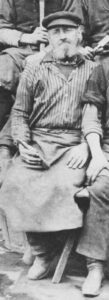
That’s right! One of the pleasures of publication is the unexpected letters one receives from readers who have something to share. I can’t say enough how thrilled I was to hear from you, a descendant of one of those Cleveland carriage makers I researched in graduate school. In the course of that project I studied more than a hundred small firms, and it’s funny, but the names still rattle around in my head: Jacob Hoffman, Kredo & Ott, J. J. Eberle, Schoonard & Dulin, Gustav Schaefer, Griese & Deuble, Jacob Lowman, Stoll & Black—-a veritable lexicon of European names. So when you said “Harm & Schuster,” not only did I recognize it, I knew I had a file on it—-just like I do on dozens and dozens just like them. But while I had information from the trade literature, the only visuals I’d managed to locate were fire insurance maps. To see photographs of the outside of the shop and of the men who worked therein—-well, that’s just priceless. Like putting a face to a name you’ve known for a long, long time. Since Michael Harm made commercial vehicles as well as passenger carriages, I used two of those images in my presentation: one of the workmen and proprietors holding representative tools of their trade, the other showing the shop hands around an express wagon. It looks like they’ve just finished resetting the tires and are about to remount the wheels. Great stuff, and a perfect example of the things that can happen when collectors and ordinary people share their resources with scholars. I spent years combing libraries and archives for material on the Cleveland trade, but I never found anything quite like what you shared with me.

Nice to hear. So what’s next? Are you working on another book?

I’ve been accumulating material on the Brewster companies for several years. In fact, at the first Carriage Symposium in 2008, my presentation was “Beyond the Builder’s Plate,” a look at Brewster carriages from a manufacturing standpoint. Carriages built by a couple of different firms of that name were some of the leading luxury brands in the trade, and they retain an avid collector interest today. I’m in the process of researching them for a second book. However, in order to write that I need to get back to New York to finish researching some important sources there. It’s a matter of obtaining grant money and such.

In the meanwhile, I continue to write on related subjects. I’ve just completed an article on the history of ready-made paint; that contains some information about the wagon and carriage industry as well.

Well then, you’ll want to hear about my grandfather, who worked at Sherwin Williams in Cleveland for fifty years — haha. Seriously, thank you for taking the time for this interview.

You’re most welcome. Thank you for taking an interest in my work and for sharing your rich family history. I think we all benefit from such collaboration.

A brief history of the Palatinate

To imagine one might write a “brief” history of the Palatinate seems grandiose, but I think Larry O. Jensen has done a pretty good job, in “Articles of Interest” in a 1990 issue of the German Genealogical Digest (Volume VI, No. 2). I summarize the contents of his article below.

The Palatinate? Known in Germany as the Pfalz (from the Latin term palatium meaning palace or castle). Also called the Niederpfalz, the Pfalz am Rhein, “Palatinatus inferior”, “Palatinatus Rheni”, Rheinpfalz, and Rheinbayern. Why so many names for one relatively small stretch of land along the Rhine River? Perhaps because this charming locality has seen a whole lot of history.

HISTORY OF THE PALATINATE

3rd century – Inhabited by Alemannic tribes
6th century - Conquered by the Franks, who established tribal districts, otherwise known as “Gauen”
9th century - Under Charlemagne, earls were established to rule the Gauen
12th century - King Friedrich I became the ruler.
1214 – Ludwig of Bavaria, of the House of Wittelsbach, became ruler of the Palatinate, by marriage
1410 - Four sons of King Ruprecht III divided the region into four parts. Ludwig III, the eldest, received the Rheinpfalz
1508-1544 – King Ludwig V introduced Protestantism, although he himself remained Catholic
1618-1648 – Thirty Years War. At the start, the Pfalz was ruled by King Friedrich IV, leading supporter of the Evangelical Union. In 1622 Heidelberg was conquered and plundered, and the Pfalz turned over to Bavaria’s Duke Maximilian. Spinola of Spain then invaded the Pfalz. The plague hit at around the same time, wiping out as much as two-thirds of the population. The Thirty Years War established the right of three religions to exist: Catholic, Lutheran, and Calvinist.
1673-79 – War between the German Empire and France, in which the Pfalz had to pay 250,000 florin in war tax. (1683, Pietists emigrate, establish Germantown, PA)
1688 – War of the League of Augsburg. King Louis XIV of France invaded and burned most of the region to the ground.
1697 - Treaty of Rijswik made the State Church Catholic, although Catholics were outnumbered 5 to 1.
1705 - Calvinist and Lutheran churches re-established.
1707 – Palatinate destroyed in the Spanish War of Succession. (1708 – another emigration led by Joshua von Kocherthal, many of whom settled in Neuberg on the Hudson River.)
1742 - The Palatinate grew and prospered in trade, agriculture, arts, and science.
1799 – France moved in to occupy the Palatinate, Napoleon officially took the region over in 1801.
1815 - Paris Peace Treaty gives the Palatinate to Bavaria. Thirteen districts were created: Bergzabern, Frankenthal, Germersheim, Homburg, Kaiserslautern, Kirchheimbolanden, Kusel, Landau, Ludwigshafen, neustadt, Pirmasens, Speier, Zweibruecken
1832 - Hambacher Festival – enormous gathering of peasants and intellecuals from all over Europe at Hambach Castle to advocate for a democracy – the tricolor black, red and gold flag was first flown. The rulers quickly put down the movement, and forbid political assemblies.
1849 - Democratic Revolution of 1848 crushed by Prussia and Bavaria (prompting a wave of emigration from the region)
1871 - The Palatinate joins the united German Empire.

There are many twists and turns in between, but were I to include them, this history would not be brief. Not at all. When I visited the Palatinate a little over a year ago, a member of the Bad Dürkheim history club noted they had suffered more than 20 wars between 1610 and 1850. No wonder the Spätlese (late harvest wines) are so popular — no doubt they take off the edge. These days, the people of the Palatinate are a fun-loving people, in a fertile, enchanting land.

Rosalie Whyel Museum of Doll Art is closing

Dolls were an especially big deal in Germany, a full-fledged industry. This photo, taken in Freinsheim, Germany around 1870, shows Elizabetha and Margaretha Harm, the daughters of Philipp and Susanna Harm, holding their dolls. I thought of this photo recently on a visit to the Rosalie Whyel Museum of Doll Art in Bellevue, Washington.

I attended with my historical fiction writer friend Michele.

“I hear the museum’s going to close its doors,” Michele said, “and I’ve always meant to go back. It’s an amazing resource for historical clothing styles and customs.”

What a great idea. At the Museum of Doll Art’s front counter, Michele zeroed in on a gorgeous book called The Rose Unfolds: Rarities of the Rosalie Whyel Museum of Doll Art.

“See? This is what I mean,” she said, pointing at a photo of one of the treasures, a doll from the Regency era. “You can learn so much about the clothing and fabrics of the period.”

“That book is half-off right now,” the woman at the counter said.

“I might just buy it. Are you really closing?”

“March 1st.”

“What’s going to happen to all the dolls?”

“We’re not sure yet — they’ll probably go into storage for a while.”

Photography was not permitted, and it’s hard to capture the marvels of that doll-populated world. Imagine the best doll house you ever saw, each room meticulously arranged with rag rugs, tiny stuffed furniture, glowing logs, a porcelain cat by the fireplace, father, mother, and kids posed in various rooms, and take it to the nth power. Circus dolls, peddler dolls, international dolls, Kewpie dolls, dolls made of wax and wood and bisque and cloth. Dolls in toy Studebaker wagons and riding on horseback. Dolls of England’s royal family, dolls selling miniature hospital supplies, even opium-smoking dolls. Many of the dolls on display were created by German artisans: J.D. Kestner, Hertwig, Heubach, and Simon & Halbig.

I learned from one display that, in the days prior to the fashion plates in magazines, dolls were used as models of the latest fashions. They were dressed in haute couture, crated, and carefully shipped on the open seas. In naval confrontations, there even existed a prohibition against firing on ships with the valuable doll cargo in their holds. The photo here — one page of The Rose Unfolds — is of a wooden doll used for smuggling — she has a compartment in her back for hiding contraband.

Celebrities of the 1848 Revolution

The “1848 Revolution” in Europe was a formative political event of the mid-19th century century. Beginning in late February, 1848 with an uprising in Paris, the foment of peasants against rulers played out across the many countries, duchies, and principalities of the day. It took over a year for all of the different revolutions to be crushed, the rebels scattered in exile. Here are a few persons who went on to make a name for themselves, who were active in some part of the 1848 struggles:

Richard Wagner was active in the rebellion in Dresden
Robert Schumann and his wife Clara were witnesses to the Dresden violence, and Schumann fled the scene rather than be conscripted in the city’s civil guard
Karl Marx was especially active in France in 1848; the failure of the rebellion convinced him of the need for a more radical society
Frederick Engels wrote about his role in the Palatinate in 1849, in a document called “The Campaign for the German Imperial Constitution
Otto von Bismarck was a young landowner who rose to power and influence on the monarchist side
Carl Schurz was a leader in the rebellious provisional governments army, who escaped from the Prussian troops through a sewer from a village under siege, sailed to America, and later became an active advocate of the newly formed Republican party and an attorney and friend of Abraham Lincoln
Jacob Müller was a provisional government civil commissioner of Kirchheimbolanden who immigrated to Cleveland, eventually becoming the tenth Lieutenant Governor of Ohio from 1872-1874.

Perhaps you know of others? If so, do tell.

Emigration geography

When in Germany, I visited the Bremerhaven Auswandererhaus, where many genealogist types do research. A large number of Germans left for the Americas (New Zealand and Australia, too) via the northern ports at Hamburg and Bremerhaven. However, it’s not the route my ancestor Michael Harm took from Freinsheim in the Rhineland-Palatinate. He went through the French port at Le Havre, and he wasn’t the only one. According to Freinsheim emigration records, many of its citizens took a similar route in the 19th century.

The map here was made in 1596, so it’s a far cry from 1857 when it comes to locations of cities and borders, but nonetheless, I provide it here with Freinsheim inked in, showing also the usual route through Paris to Le Havre, in order to demonstrate how the French port of departure made sense geographically. It also made sense politically. Many young men who left snuck out of the country, since they were liable for military duty in the Bavarian-controlled Palatinate of the day. It seems the French were willing to look the other way when it came to the paperwork. Hence, consider Le Havre, France another place to look for your ancestors emigrating from southwestern Germany.

A good tome on religion in America

I admit I’m a history geek: Snowbound in Seattle, I can’t think of a better way to spend the day than curling up by the hearth fire with a just-discovered tome: Religion in American Life: A Short History, by Butler, Wacker and Balmer (2003).

Intended as an overview, the book begins with native religions and extends all the way into the Reagan and Bush eras of American conservativism.

Right now I’m buried in the chapter called “Reformers and Visionaries.” For example, William Miller’s numerology (mentioned in an earlier post: Is 2012 the end of the line?) led him to calculate the return of the Lord would occur in 1843. “[Miller's] views reached a broad audience in Horace Greeley’s New York Herald, complete with illustrations. Comets and meteor showers at the time added to the excitement. Some said that Miller attracted thirty thousand to one hundred thousand followers.”

Another end-times religion began in the mid-18th century, due to the visionary zeal of Mother Ann Lee. Her sect came to be known as the Shakers. One of nineteen Shaker communities, the North Union Shaker Community was organized in 1822 on land just outside Cleveland, on property along Doan Brook.

Better known as Shakers, members of the sect called themselves “Believers,” a shortened version of “the United Society of Believers in the Second Appearing of Christ.” Suffering persecution in England, a small band led by their founder, “Mother” Ann Lee, came to America in 1774. Ann Lee symbolized the second coming of Christ in female form, establishing the Shaker concept of sexual equality and of the deity as a father-mother God. Shaker colonies were founded in New York and the New England states, and later, on the frontier. (from The Encyclopedia of Cleveland History)

Today, the North Union Shaker Community is the neighborhood of Cleveland called Shaker Heights.

Remembering 1857

My ancestor Michael Harm emigrated from Germany to the U.S. in 1857. During my research of the time period, I’ve discovered a number of “big events” occurring that year.

- July 4th riots in the Five-Points slum of New York City, a Democrats v. Republicans squabble over who controlled the city, including control over liquor laws.
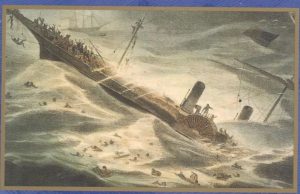
- On August 24th, railroad stocks tumbled, kicking off the financial Panic of 1857, further exacerbated by the sinking of the “Central America,” a ship loaded with federal gold to back up the U.S. treasury.
- Transatlantic telegraph cables were laid from North America to the United Kingdom for the first time. The first signal was feeble at best, then failed altogether a short time later. The first successful instantaneous communication across the Atlantic would not occur until after the Civil War.
- The Atlantic Monthly was founded. I learned this the other day in the grocery story, when I plucked off the magazine shelf a special issue of articles published in the Atlantic on stories of the Civil War. It is an issue in honor of the 150th anniversary of the Civil War about the mid-19th century discussion of slavery, and includes essays by Louisa May Alcott, Oliver Wendell Holmes, Sr., Nathaniel Hawthorne, and the first editor, James Russell Lowell. Here is an excerpt about the history of the magazine, given by Cullen Murphy at a 1994 presentation:

The year was 1857. Railroads did not yet cross the North American continent, but everyone knew that one day soon they would. The publication of Darwin’s Origin of Species was two years away, but loud rumblings in the halls of science had already warned the keepers of religious faith that serious challenges lay ahead. The largest wave of immigration in the nation’s history was pouring through the cities of the eastern seaboard. Though he would become President in four years, Abraham Lincoln in 1857 was no more widely known nationally than any former one-term Congressman is today. But the clouds of secession had begun to gather, and few believed that North and South, still joined by weak bonds of vexing compromise, would not soon be torn asunder.

Among educated people throughout the United States the issue of slavery was obviously one of great moment. But so, too, was another matter, and in the baldest terms it might be said to have involved an attempt to define and create a distinctly American voice: to project an American stance, to promote something that might be called the American Idea.

It was this concern that brought a handful of men together, at about three in the afternoon on a bright April day, at Boston’s Parker House Hotel. At a moment in our history when New England was America’s literary Olympus, the men gathered that afternoon could be said to occupy the summit. They included Ralph Waldo Emerson, Henry Wadsworth Longfellow, James Russell Lowell, Oliver Wendell Holmes, and several other gentlemen with three names and impeccable Brahmin breeding—men from the sort of families, as Holmes once noted wryly, that had not been perceptibly affected by the consequences of Adam’s fall. By the time these gentlemen had supped their fill, plans for a new magazine were well in hand. As one of the participants wrote to a friend the next day, “The time occupied was longer by about four hours and thirty minutes than I am in the habit of consuming in that kind of occupation, but it was the richest time intellectually that I have ever had.” Soon the new magazine acquired an editor, James Russell Lowell, and a name—The Atlantic Monthly.

Is 2012 the end of the line?

2012 is here, and with it a host of dire prognostications about the end times, most recently in this Los Angeles Times article: Will the year 2012 be a game-changer?

What startles me, in researching 19th century Cleveland, is the number of game-changing religions afoot in Ohio’s Western Reserve.

Everyone, then and now, loves to make fun of the Millerites. Here is a picture of a round (8-sided) church built by the good people who followed William Miller, a preacher who foretold the end of the world by March 21, 1843, no wait, April 22, 1844, no wait, October 18, 1844 …

In 1833, construction began on a Mormon Temple (still standing) in Kirtland, Ohio, a little northeast of Cleveland, where many new revelations occurred, and Joseph Smith was named President.

It was also an era when Mary Baker Eddy founded the first Church of Christ, Scientist (1866 in Boston). According to the Encyclopedia of Cleveland History, General Erastus N. Bates “secured 2 rooms in a downtown building and formed a ministry based on the teachings of Mary Baker Eddy, founder of the Christian Science church.” Eddy writes in the preface to Science and Health: “The time for thinkers has come.”

In these 21st century times, we the people continue to explore spiritual frontiers.

History lightbulb

At a recent gathering of friends, I mentioned how much I was learning about the 19th century. Things I had never thought about before.

“Really, like what?” Whitney asked.

“Well, before Edison and the lightbulb, an inventor named Charles Brush invented the arc lamp. His lights were used to light Public Square in Cleveland back in 1874.”

“What about Thomas Edison? When did he invent the light bulb?”

I was in trouble then, because I wasn’t sure. Later, looking it up, I happened upon the Library of Congress Science Reference site,” and the question: “Who invented electric Christmas lights?” (Tis the season) The answer: Thomas Edison, in 1880, when he strung electric lights around his Menlo Park research facility. Apparently, two years later his business partner Edward Johnson made a patriotic string of lights–red, white, and blue–to adorn his Christmas tree. Because such a novelty was exorbitantly expensive then, the tradition would not catch on for another four decades.

The Christmas tree, or Tannenbaum, is an especially German contribution to the American Christmas tradition. Also the decorations. The glass balls originated in the Thuringian region of modern day Germany. According to About.com German Christmas Ornaments, F.W. Woolworth made a fortune importing them in the 1880s. And the tinsel? Don’t even get me started on the tinsel. Once upon a time, though, it was made of actual silver, and brought a real sparkle to the candlelit trees.

The Freidenker

I was ferreting around the Internet looking for, among other things, quotes by Benjamin Franklin about German immigrants, and I came across a write-up at Dialog International. The things Ben Franklin thought and said are at this post on the site. The post begins with the statement: “Immigrants to America have always been feared and hated.” It’s striking, isn’t it, how political turmoil regarding immigration spans the centuries? Newcomers are consistently the outsiders. Gotta get a handle on that (rather than, for instance, a wall).

Meanwhile, the Dialog International site where I found the above post intrigued me. The tone is rational, clearheaded, and humanitarian in scope. I clicked on about me and learned the blog theme is: “Free thinkers who are interested in cross-cultural dialogue.” The term “Free thinkers” triggered a memory. The word Freidenker, freethinker, is generally synonymous with “atheist.” Back in the 1830s and 1840s, this rationalist perspective was also prevalent in the rural village of Freinsheim, according to writings of the then-pastor Johann Georg Bickes. In a description of his parish, Bickes wrote of: “a pernicious spirit of unbelief… Here, as everywhere, there are those who are led astray by false enlightenment, following their own arrogance. They do not pay attention to the word of God, and are infected by the pernicious spirit of unbelief and frivolity, of carelessness, of arrogance and contempt of divine laws.”

Further investigation led me to this statement in the German-language Wikipedia: “Freidenker sind im heutigen Sinn Menschen, die sich an wissenschaftlichen Erkenntnissen orientieren und zu einem nichtreligiös geprägten Humanismus bekennen. … Freidenker bestehen zwar auf ihrer Unabhängigkeit von Glaubensregeln wie Tabus und Dogmen, beziehen sich aber ausdrücklich auf ethische Grundsätze von Freiheit, Gleichheit, Toleranz und Gewaltverzicht.” [Translation]: “In the modern sense, Freethinkers are people oriented to a non-religiously influenced humanism based on scientific findings. … Indeed, Freethinkers insist on their independence from religious rules, such as taboos and dogmas, relying instead on the ethical principles of liberty, equality, tolerance and nonviolence.”

Historically, in the 1840s in the Bavarian Rhineland and surrounding areas, Freethinkers were German intellectuals who wished to overthrow their religious and political autocracies in favor of a constitutional democracy. These men read Thomas Paine, author of “Common Sense, “The Rights of Man” and “The Age of Reason,” who also inspired humanitarian zeal in America’s founding fathers. When the 1848 revolution was suppressed, many German intellectuals emigrated (or were forced to flee). In Cleveland, Ohio, ex-patriated Germans formed a Society of Freemen and beginning in 1853, held an annual Thomas Paine celebration.

In a Wikipedia entry on Freethought, I found the following: “[German 1848er immigrant] Freethinkers tended to be liberal, espousing ideals such as racial, social, and sexual equality, and the abolition of slavery.” What followed was a short-lived but heartening “Golden Age of Free Thought.”