The Germans are coming !

I just heard from my cousin that he is traveling with his girlfriend to America, to visit family in Omaha and afterwards, to visit us in Seattle in April.

My cousin and I are very distantly related. I have only met his sister, who has helped me so much in translating our family letters from the 1800’s, the same letters that are the basis for my thesis project. Angela and I worked together to translate the letters from Gothic German to German, then to English. She did most of the work, I did most of the typing.

The three of us share DNA with K. Elisabeth Handrich (d. 1864) and John Philipp Harm (d. 1872) of Freinsheim, a small town in the Rhineland-Palatinate near the Haardt Nature Park. In the mid-nineteenth century, John Harm and his wife Elisabeth had three children: Philipp, Michael, and Susanne. My German cousins are descendants of Philipp, who stayed in Freinsheim. I am a descendant of Michael, who left to come to Cleveland, Ohio when he was just 16 years old.

When I meet my cousin, you can be sure I’ll be looking for a family resemblance!
Ahh, die Deutsche Volkslieder

In my research this last couple of days, I came across an article written in the Atlantic Monthly magazine from 1869 about Walter Mitchell’s travels in Germany and his growing appreciation for old German songs. He wrote:

“You think, don’t you, that the German is harsh? And you have an idea that the Italian is musical … But did you ever hear German gentlemen or ladies conversing, or Neapolitan fishwomen squabbling? There is another side of the case to be heard, may it please your Honor.

The German language flows into rhythmic and rhyming order without effort. Our English is stiff and rigid, with its inevitable couplets, in comparison.

… German verse twists its rhymes easily this way and that, as a child bends its pliant little body and limbs. There is many and many a song I know of which has a musical subtlety of composition perfectly inimitable, and no more to be translated than a pun out of English into French.

You thought German poetry was mystical and in the clouds? … No more than French cookery is all pepper and mustard. … German prose is mystical when it treats of mystical things, but the German language has a greater power of precise statement than our own. The very obscurity of German thought arises out of the fine capacity of German words for hair-splitting definitions.

Here’s a drinking song:

Here I come out of the tavern all right.
Street, thou presentest a wonderful sight;
Right hand and left hand, now this side, now that,
Street, thou ‘rt in liquor, — I see it, that’s flat!

What a squint countenance, moon, hast thou got;
One eye he opens and one keeps he shut;
Clearly I see it, moon, thou must be mellow:
Shame on thee, shame on thee, jolly old fellow.

There go the lamp-posts, which used to stand still,
Spinning around like the wheel of a mill,
Dancing and prancing to left and to right;
Seems to me everything’s tipsy tonight.

All topsy-turvy, both little and great;
Shall I go on and endanger my pate?
That were presuming. No, no, it is plain,
Better go back in the tavern again.

I’m hoping as I learn more German, I’ll understand the lyrics to this song I found on Youtube. I’m really starting to like this German folk music. It’s growing on me.

der Spargel = Asparagus

Who could imagine that asparagus would vary from country to country?

When I traveled to Germany in 1988, it was springtime. The asparagus was just coming up and ready for harvest. Der Spargel, they called it when I pointed rudely and asked what the vegetable was. At first, I thought the pale yellowish-white spears were something new. Then it dawned on me: Asparagus.

Warum ist es nicht grün? Why isn’t it green?”

Grün?! My relatives were horrified. “Nein, nein.” Apparently asparagus is only green if you grow it the wrong way, exposed to the sun. When grown properly, der Spargel is kept hidden under the dirt. As it pokes up its spears, you keep piling dirt over it, never letting the clorophyll see the sunlight. When harvested, your asparagus will be pale as a ghost, the best way to eat it.

Maybe you’ve heard of white asparagus, but I never had. Just yesterday, though, in the spirit of globalization, I saw some for sale at the grocery store.

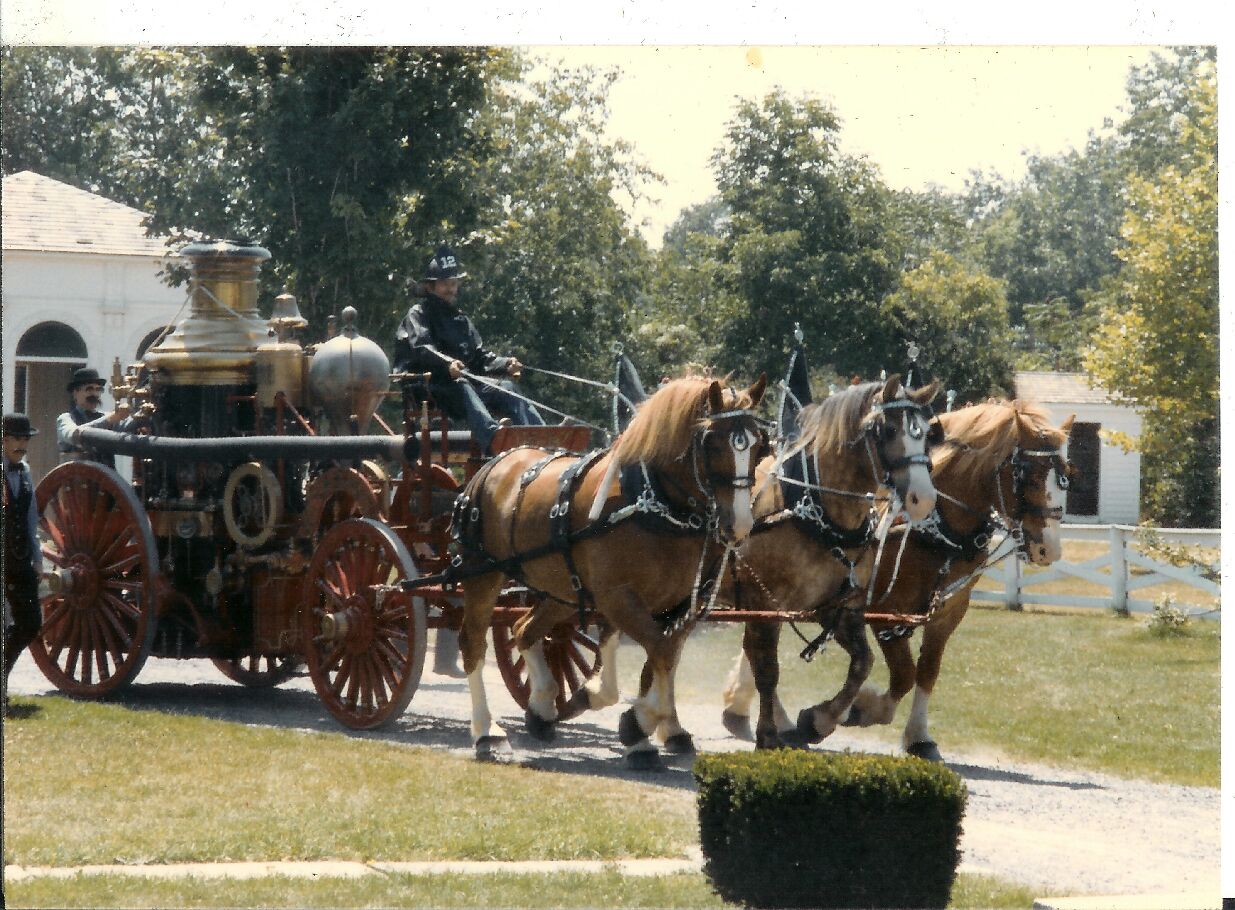
Draft horses

I came across this old photo in an album I was scanning. It’s not that old — maybe the ’70’s. But I think it’s a historic restoration of a nineteenth century fire wagon.

Farriers

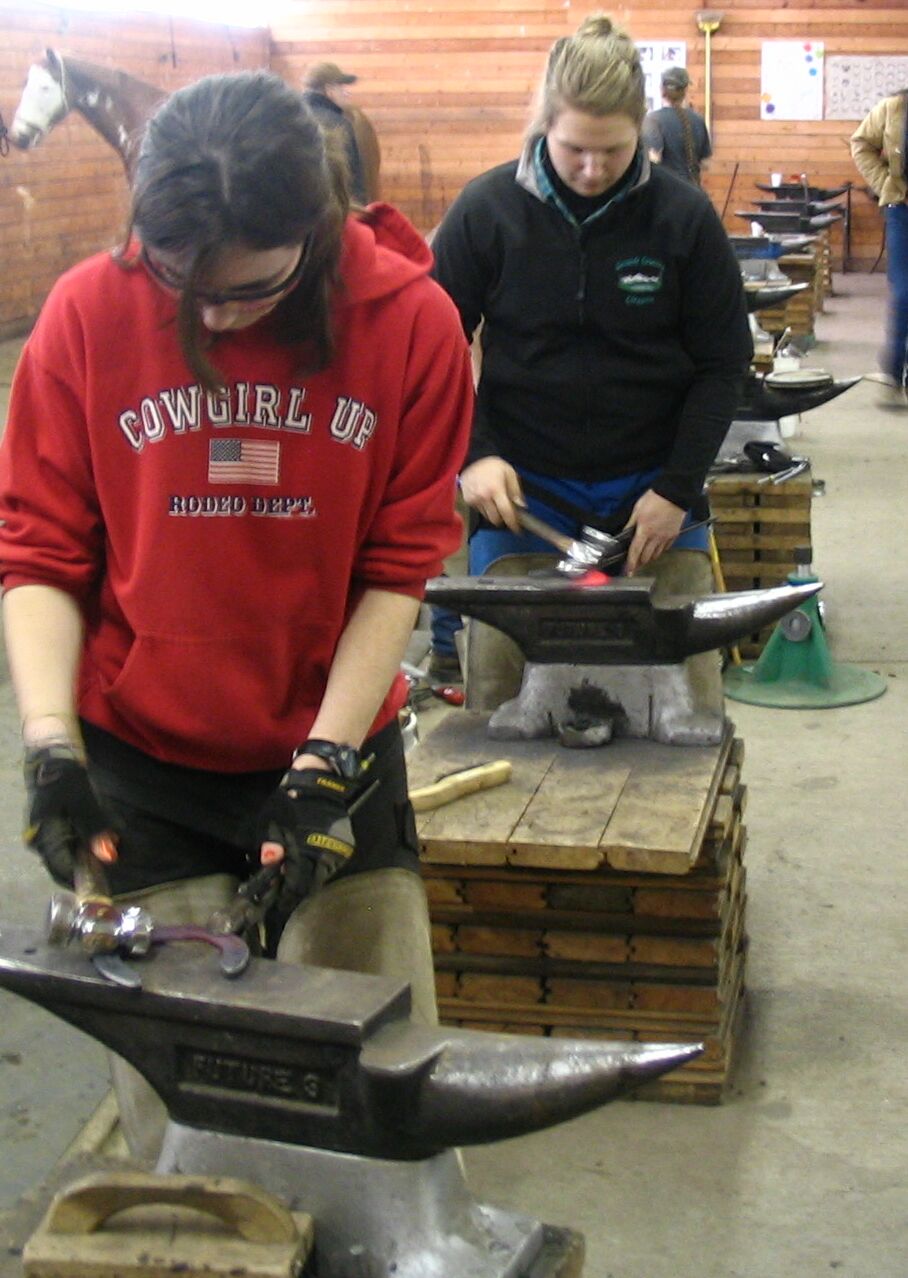
I spent the day at Mission Farriers School, watching horseshoes get pounded into being. And I mean pounded — bending metal takes heavy hammers and brute force.

Mission Farrier School, Snohomish

I heard tell that “in the old days” a 14-year-old  boy, in Ireland, say, could crank out 110 horseshoes daily. Plain stamp shoes.

While I looked on, one mule did a sidekick like Chuck Norris on her owner. Six times. Whoa Nellie! Luckily, the horsewoman was wearing a padded, loose-hanging jacket.

Call me a schlemiel

Call me a schlemiel. A dolt. An unlucky bungler. Last fall, when I signed on to write a novel based on nineteenth century letters for my MFA thesis, I began by reading Moby-Dick. I’d always wanted to crack the cover of Herman Melville’s masterpiece, published in 1851, and I thought it might be a good way to get a feel for the time period. You cross your eyes–mine did in more than one chapter. The unlucky part? It took a long time to read it. At page 595 Ahab finally spots the White Whale. Slogging through, I had to keep putting the book down to read other things. Which turned out all right, since each chapter stands on its own. There’s even one about a blacksmith.

The point is, Melville was writing about the general time period when my great-great grandfather sailed the Atlantic Ocean from the Rhineland-Palatinate to the United States. And while people think of the novel as being about Captain Ahab’s madness, the book is clearly an examination of the prevalent whaling industry and the massacre of these creatures of the ocean, as well as the inherent dangers of the men who hunt them.

Melville pauses at one point to exclaim:

“For God’s sake, be economical with your lamps and candles! not a gallon you burn, but at least one drop of man’s blood was spilled for it.”

So we find ourselves in the year 2010 crying for god’s sake, be economical with your oil! Not a gallon you burn, and not only the blood of men, women, and children is spilled, but the earth’s blood as well.

When my great-great grandfather arrived in Cleveland in 1857, oil refineries didn’t exist. Rockefeller would build the first oil refinery in 1861. During the Civil War, an oil boom began, causing a huge increase in the number of oil refineries in Ohio and Pennsylvania. From whale oil to crude oil–if only our fuel sources didn’t stink of greed and death.

Metal splashes from the crucible

My great-great grandfather came from Freinsheim to Cleveland in 1857, and apprenticed with his uncle as a blacksmith. He was sixteen years old. I want to explore and write about his experience. To piece it together, I have original source material–photos and letters sent from my father’s ancestors back to their relatives in Germany. My German cousin Angela has been invaluable in learning the Old German script and translating the letters. I’ve been reading about the history of Cleveland, Ohio and the Rheinpfalz (Rhineland-Palatinate) region of what is present-day Germany, about steam and railroads and blacksmithing, about the 19th century immigrant experience. I’ve outlined and gathered my wits, and am now ready to begin writing a novel of historical fiction. With this blog, I’ll share some things I learn along the way.